
When I started my cybersecurity journey, almost everyone gave me the same advice: “Do CTFs.” And to be fair, that advice helped me a lot in the early stages. Capture the Flag challenges played a major role in building my technical foundation and confidence.
However, as I moved forward—working on home labs, completing certifications like eJPTv2 and PT-1, and testing real-world web applications—I realized something important:
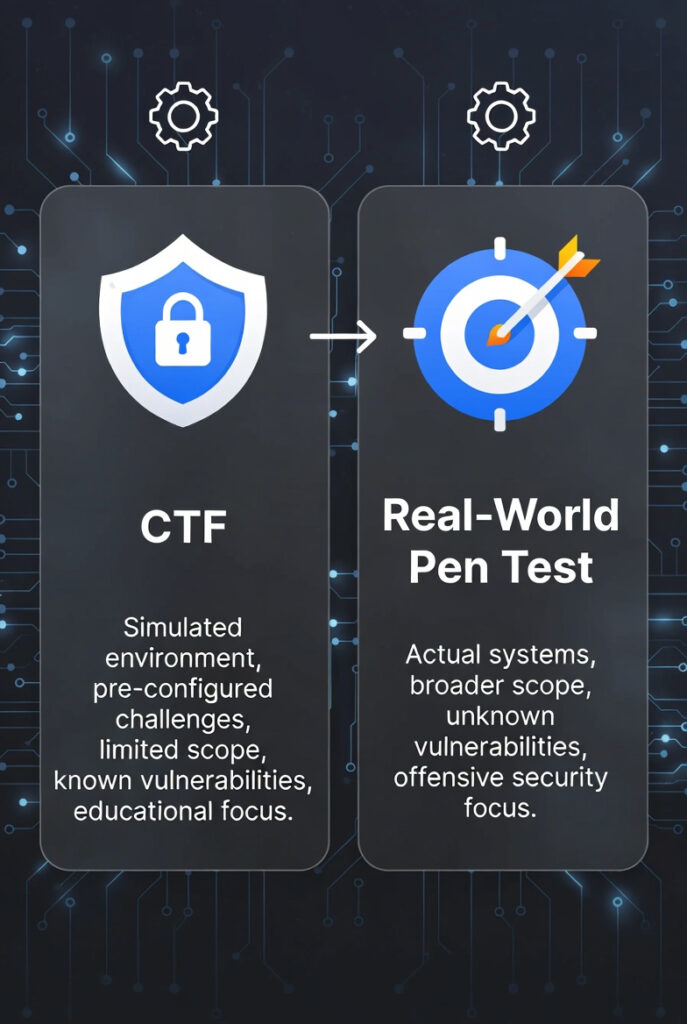
CTFs and real-world pentesting are not the same thing.
In this blog, I want to share what I learned from my own experience so beginners don’t fall into the common trap of thinking that solving CTFs alone is enough to become a pentester.
What CTFs Are Really Good For
CTFs are excellent learning tools, especially for beginners. When I was completing TryHackMe labs and practicing basic exploitation techniques, CTFs helped me understand how vulnerabilities work at a technical level. They teach you how to use tools like Nmap, Burp Suite, Metasploit, and Wireshark, and they train your brain to think like an attacker.
CTFs are structured environments. You are usually given a vulnerable machine or application, and your goal is clear: find the bug, exploit it, and capture the flag. This makes them perfect for learning concepts such as XSS, SQL injection, file inclusion, and basic privilege escalation.
For beginners, this is valuable. It builds confidence and removes fear. Seeing a successful exploit for the first time is often what motivates people to continue learning cybersecurity.
But this structure is also where the problem starts.
Where CTFs Can Mislead Beginners
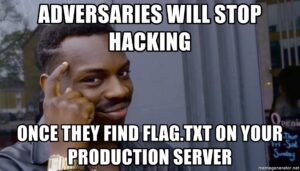
CTFs are intentionally vulnerable. Real-world applications are not.
In a CTF, you know there is a vulnerability. In real pentesting, most of the time, there isn’t. When I transitioned from CTF-style labs to testing real applications, the difference was immediately obvious. Vulnerabilities were no longer obvious, payloads didn’t always work, and many hours of testing resulted in nothing exploitable.
Another major difference is that CTFs focus heavily on exploitation. In real-world pentesting, exploitation is often unnecessary—or even unsafe. Many real bugs are logic-based, not technical.
For example, I found broken access control issues where a low-privileged user could perform admin actions simply by modifying or replaying requests. There was no payload, no shell, and no “cool exploit.” Just a failure in authorization logic. In CTFs, this kind of issue is often overlooked or simplified.
What Real-World Pentesting Actually Looks Like
Real-world pentesting is slower, more analytical, and far less glamorous than CTFs.
Instead of chasing flags, you spend time understanding application workflows, user roles, and business logic. You test how the application behaves when users do things they shouldn’t be able to do. You look for inconsistent authorization checks, insecure file handling, excessive trust in client-side controls, and misconfigurations.
In one of my real tests, I identified a file upload issue where large PDF files could be uploaded without any size restriction. The impact wasn’t remote code execution—it was a potential denial-of-service risk due to server resource exhaustion. This is the kind of issue that matters in production systems, even though it wouldn’t feel exciting in a CTF.
This is where many beginners struggle, because real-world pentesting rewards patience and understanding more than quick exploitation.
Exploitation vs Impact: The Core Difference
The biggest difference between CTFs and real-world pentesting is impact.
CTFs reward you for exploitation.
Real pentesting rewards you for explaining risk.
When writing real vulnerability reports, it’s not enough to say “this endpoint is vulnerable.”
You must explain what an attacker can achieve, who is affected, and why the issue matters. This skill became especially important for me when I started focusing on proper reporting and professional pentesting workflows.
A well-documented low-severity issue with clear impact is more valuable than a poorly explained high-severity finding.
How Beginners Should Balance CTFs and Real Practice
CTFs are not useless—but they should not be your end goal.
Use CTFs to learn:
- How vulnerabilities work
- How to use tools
- How attackers think
Then slowly shift your focus to:
- Home labs with real operating systems and applications
- Manual testing of application logic
- Reading real bug bounty reports
- Writing clear vulnerability descriptions and impact statements
This shift is what helped me move from “solving challenges” to actually thinking like a pentester.
Final Thoughts
CTFs make you good at hacking challenges.
Real-world pentesting makes you good at securing systems.
If your goal is to become an ethical hacker, bug bounty hunter, or professional penetration tester, understand this early: the real world does not reward flags—it rewards understanding, clarity, and impact.
CTFs should be a stepping stone, not the destination.